
Medium density housing mini-research
As the government sets out the need for greater density in creating sustainable development, medium density housing represents the missing middle: a key tool in unlocking sites and delivering responsible growth.
Research carried out last year by Tibbalds, now published in full, sets out how this type of development is imperative to delivering these national policy objectives whilst diversifying opportunities for the sector.
Medium density housing – typically 3-6 storeys at 40-100 dwellings per hectare – sits between suburban development and high-rise apartment buildings.
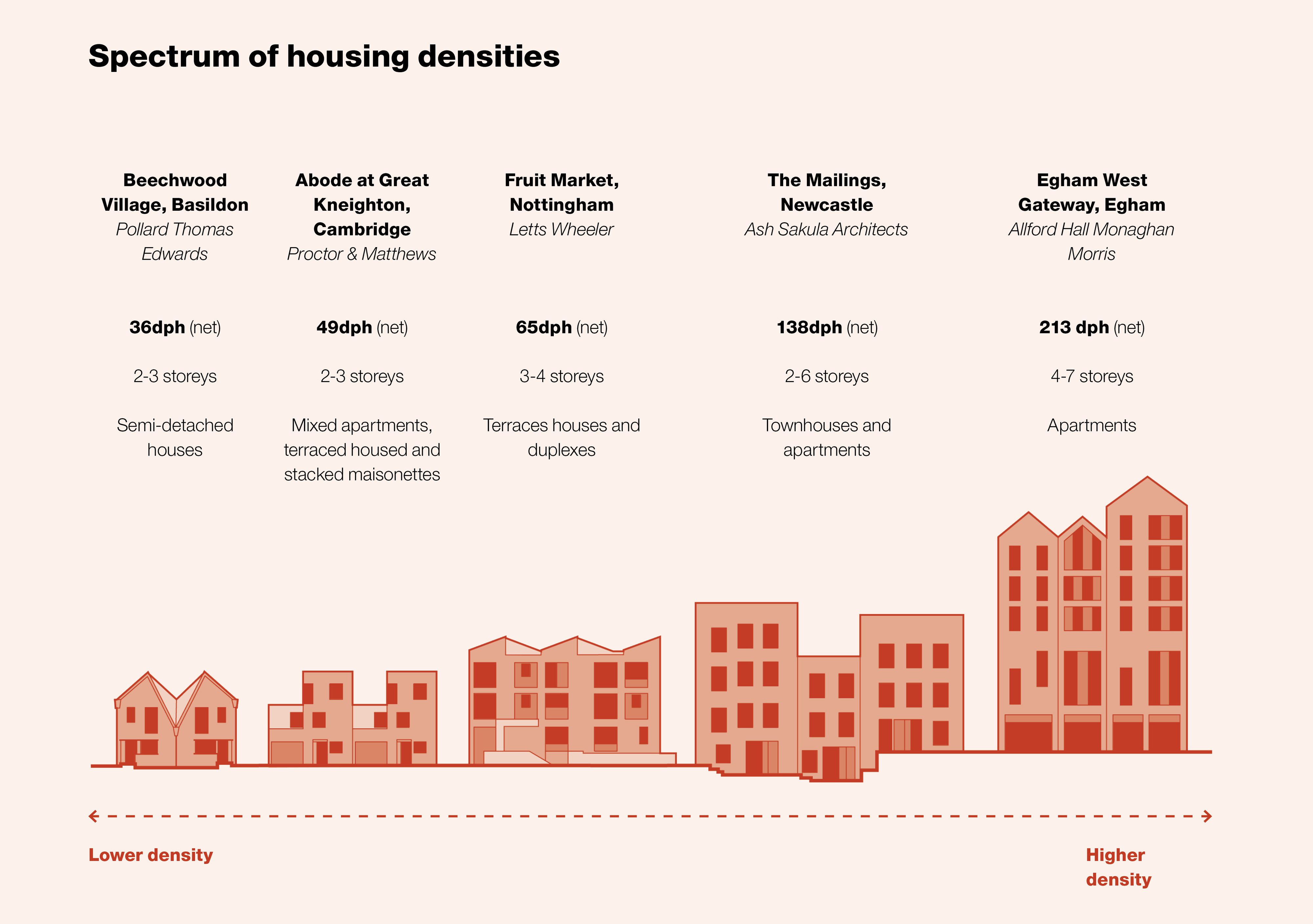
Originally commissioned by the Office for Place, our research sets out six key findings to help the development sector, planning authorities, funding agencies and investors deliver high-quality, sustainable and compact developments at scale.
It includes insights on delivery, viability, design and planning, drawing on case studies and stakeholder engagement with national housebuilders, SMEs, viability consultants and architects.
"Medium density development is rooted in place and led by local character," said Katja at Tibbalds. "It doesn't rely on tall buildings or high percentages of flats, but provides an opportunity to diversify new neighbourhoods, broaden people's choices and create places that put people first."
“It must become part of every strategic development proposal and should be the dominant form on urban infill sites."
This development type supports key aims in the new National Planning Policy Framework (NPFF), including the requirement to deliver 50 dph around well-connected stations. The Design and Placemaking Planning Guidance Draft also promotes the optimisation of density in locations that can support more public transport use, waking and cycling and use of local services.
This work builds on Tibbalds’ decades-long experience tackling complex challenges across planning, urban design and architecture, working across scales: from policy and strategy through to masterplanning, design codes and planning applications.
Read the full document here.
Topics:
Related Updates


Stay In Touch
Sign up to our Newsletter
Subscribe to our newsletter to receive updates about making people friendly places.