Lessons from the forefront of design coding

Tibbalds

What we have learned - and what it means for our practice today
Tibbalds have been at the forefront of the development of design codes and guides throughout the history of their use in England as practitioners; researchers; and contributors to national policy. This is our assessment of what we have learned, and what it means for today.
Design codes and design guides have been part of urban design practice since the late 1980s: Mainly used for large-scale new developments until recently, research has confirmed that design codes raise design quality. National planning policy and successive government pilot and pathfinder programmes have reinforced their place in the system over time.
Our perspective draws on day-to-day practice of preparing design codes for Local Authorities and master-developers; direct involvement in the government's most recent design codes programme, and on our leadership of the earlier research programme that first brought site-based design codes into the English planning system. It is also shaped by over 30 years of preparing and using design codes and guides in practice.
That history spans from Birmingham's Urban Design Strategy (BUDS) in 1990 to new settlement design codes for Northstowe Healthy New Town; from district-wide area design codes for South Norfolk and Broadland to design guides for Runnymede and Eastleigh. Along the way, we have co-authored the National Design Guide and advised consecutive Government’s on policy relating to codes and guides.
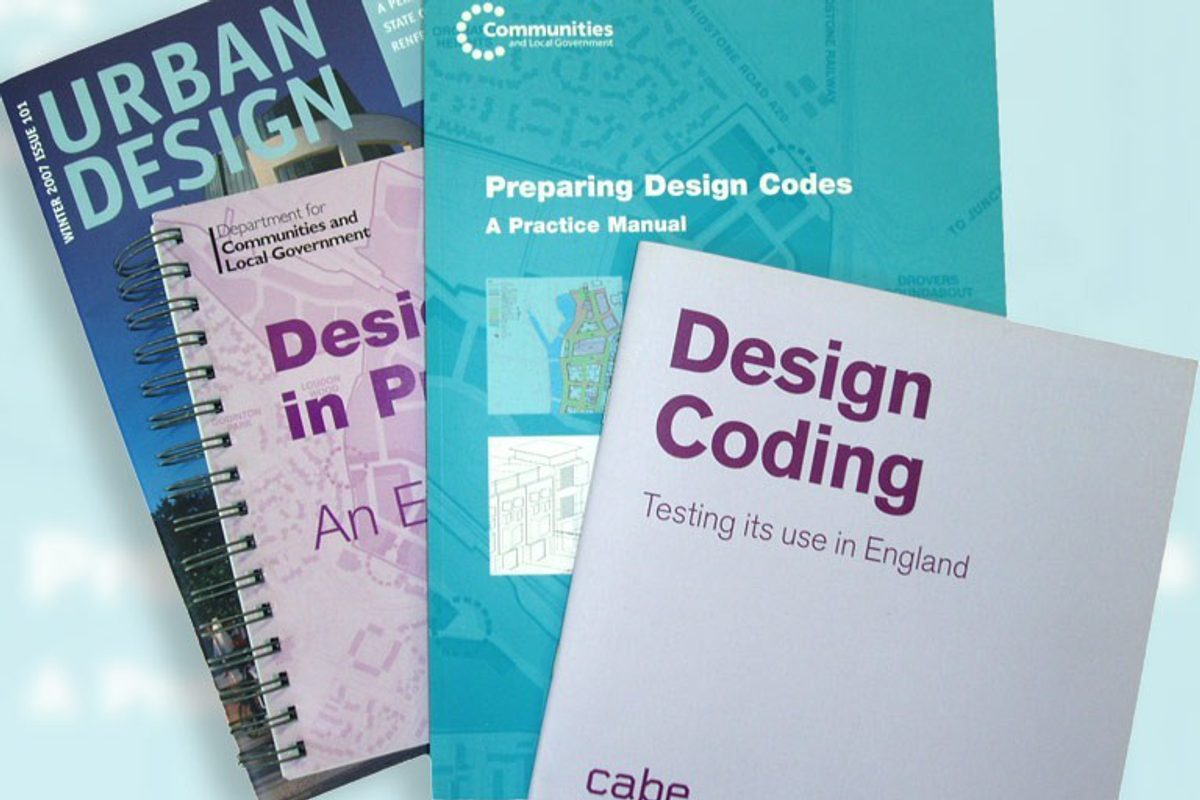
The documents that we prepared range across urban neighbourhoods, complex regeneration sites and rural parishes, with each being tailored to suit the needs of our client and to address the aspirations and challenges of the place at that time.
Our co-leadership of the government's Design Coding Research in the early 2000s, and more recent involvement in the Design Codes Pilot and Pathfinder programmes, means we both draw upon and influence best practice. Every project adds to our knowledge of what makes codes and guides succeed. The question we return to is not whether to use a design code or guide, but how to prepare and use one well.
Below: Photographs of completed developments.


How we see design codes and guides
Design codes and guides are tools, and their value depends on how appropriate they are to the situation. They sit within a broader family of design policy that also includes development frameworks, masterplans, development briefs and design briefs, each serving a purpose at different stages and scales of the planning process. The NPPF distinguishes between design codes and guides.
Below: How we see the differences between design codes and guides.
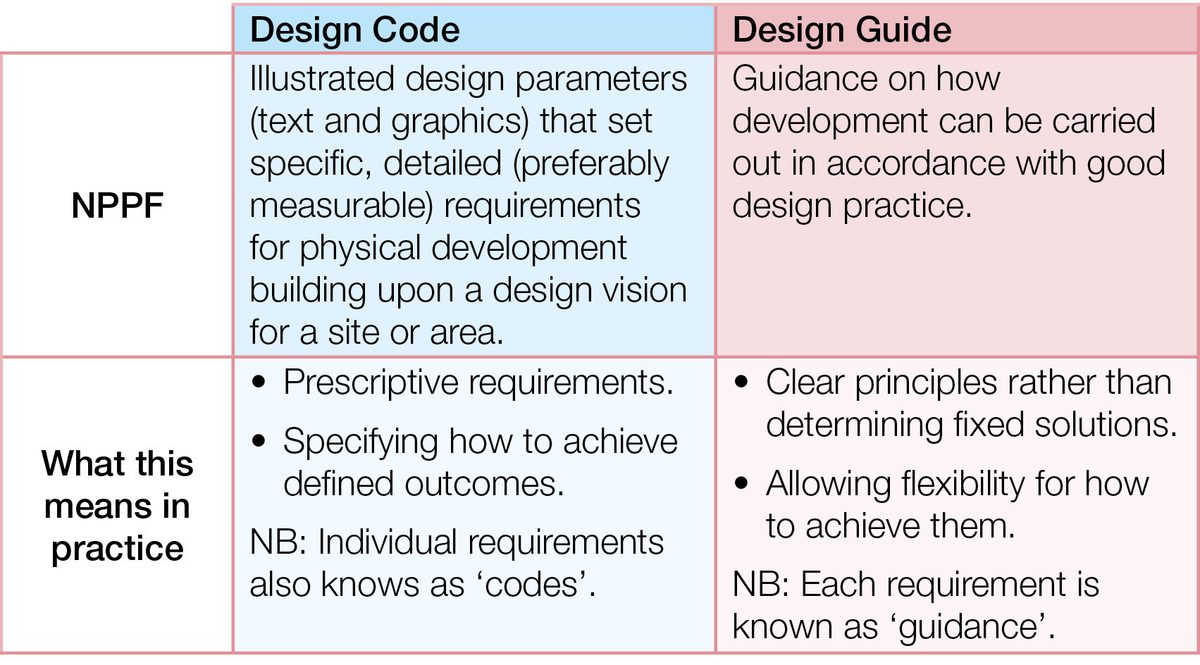
In practice, we find it most useful to think of them as being on a spectrum: many design codes include guidance, and the most effective design guides are clear and specific enough to be relatively code-like.
Below: Different types of design codes and guides apply in many different situations.

Design codes and guides set design expectations for others to follow in future, setting a brief for future developers and their design teams. Their role is to regulate what is important, not to define comprehensively every aspect of a future proposal. To be effective, they must be accessible and user-friendly for professionals and communities alike. And to truly add value, placemaking for people and planet must be at the heart of their ambitions.
Below: Extract from Northstowe Phase 3A Key Phase 1 Design Code - Runway Lake Framework Plan.
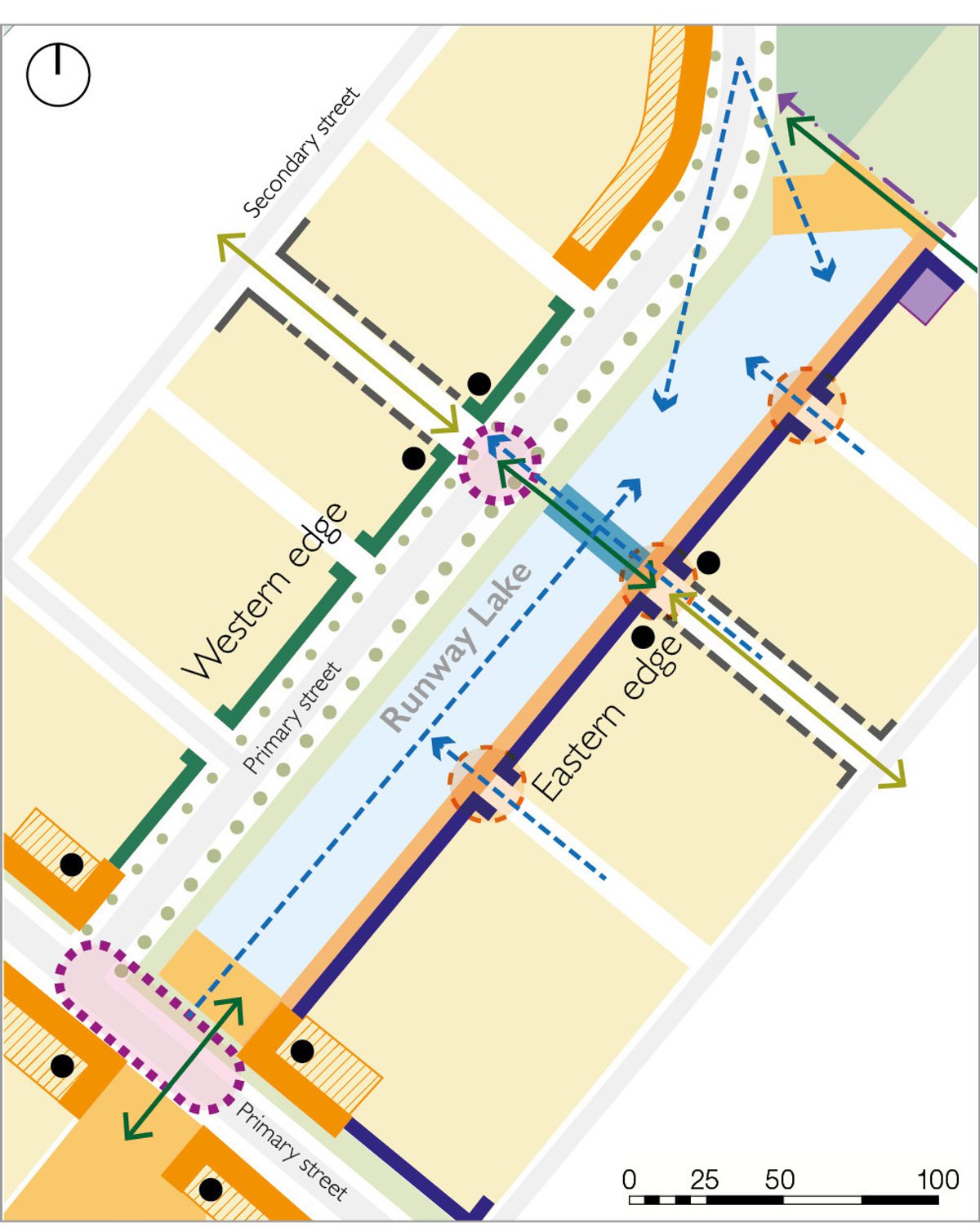
We only need to think of outdated highway standards to know that simply having a design code or guide does not guarantee quality. Results depend on the quality of the document itself, what it is trying to achieve, and how well it is used in practice. At Northstowe, we were brought in to develop and test the masterplan vision and prepare design codes for Phase 2, following the failure of the earlier Phase 1's code to deliver its design quality ambitions. In Phase 2 we learned lessons from Phase 1 and in Phase 3 we learned from Phase 2. Writing design codes and guides is an ongoing learning process to ensure documents are up-to-date and do not lock-in outdated principles.
Below we have identified a series of key lessons.
1. Purpose and ambition
Design guidance has most value when it is produced to support an ambition to achieve positive change in a place and/or in local planning practice, and it has a clear purpose. Our projects are all tailored to meet their specific purpose. For example, our Bracknell Design SPD aimed to streamline the application process and prevent poor practice by providing clear guidance on frequently recurring issues, whereas the aim for the Stoke-on-Trent and Newcastle-under Lyme Urban Design Guide was to provide a coherent strategic urban design vision for the conurbation, with design guidance to raise aspirations and deliver it consistently across two local authorities.
That purpose influences a whole series of decisions, from whether to use a code or a guide, what evidence to gather, what engagement looks like, to how the document is structured and communicated. A compelling vision is the best way to explain the placemaking ambition that a design code will deliver, whether this is a masterplan, as at Bucklers Park, where we aimed to create a landscape-led neighbourhood, or a concept, such as for Paradise in Hemel Hempstead, where our ambition was for a coherent transformation of an industrial area.
Below: Extracts from Bucklers Park Design Code.


Below: Extracts from Paradise Gardens Design Code.


Our recently adopted Eastleigh Design Guide has been framed around the Local Plan objective to densify development in certain areas. Design principles and a definition of ‘compact development’ act as tools for Development Management officers in their assessment of applications, while it is for applicants to define their proposed approach to local character in relation to: Conserving; Evolving and enhancing; or Reinventing the existing character.
It also means being realistic. Codes and guides can achieve a great deal, but they are not the right vehicle to solve every problem. Issues requiring a national response (for instance giving greater force to Manual for Streets) should not be displaced onto local documents that lack the force to tackle them effectively.
Health and wellbeing has always been at the forefront of our interests. Our guide, prepared together with the Quality-of-Life Foundation, TCPA and TRUUD, brings together lessons learned for design coding: Design Codes for Health and Wellbeing.
2. Select the right tool and tailor it to suit
Design codes work well in areas of planned or anticipated change where the parameters of future development are known, either because they are reasonably simple to define or there is a masterplan vision. They are effective in areas with relatively consistent characteristics and for regulating innovative forms of development. For example, the draft district-wide Bradford Design Code focuses on medium-density housing to support the Council’s objective of delivering density. This code was conceived as a kit-of-parts, allowing local groups to shape these into a locally specific response.
Guides offer more flexibility and aim to raise design quality more generally. They suit areas with diverse characteristics and a wide range of situations, such as many rural districts, where a single prescriptive code would struggle to accommodate the variety of settlements and landscapes. They can also coordinate detailed codes for more local areas. The character assessment and design guide for Breckland provides a framework for parishes when preparing neighbourhood plan character assessments and design codes.
Design codes and guides are not interchangeable. Each has distinct strengths, and choosing which to use, and the right combination of coding and guidance, is a key decision that shapes the success of design guidance.
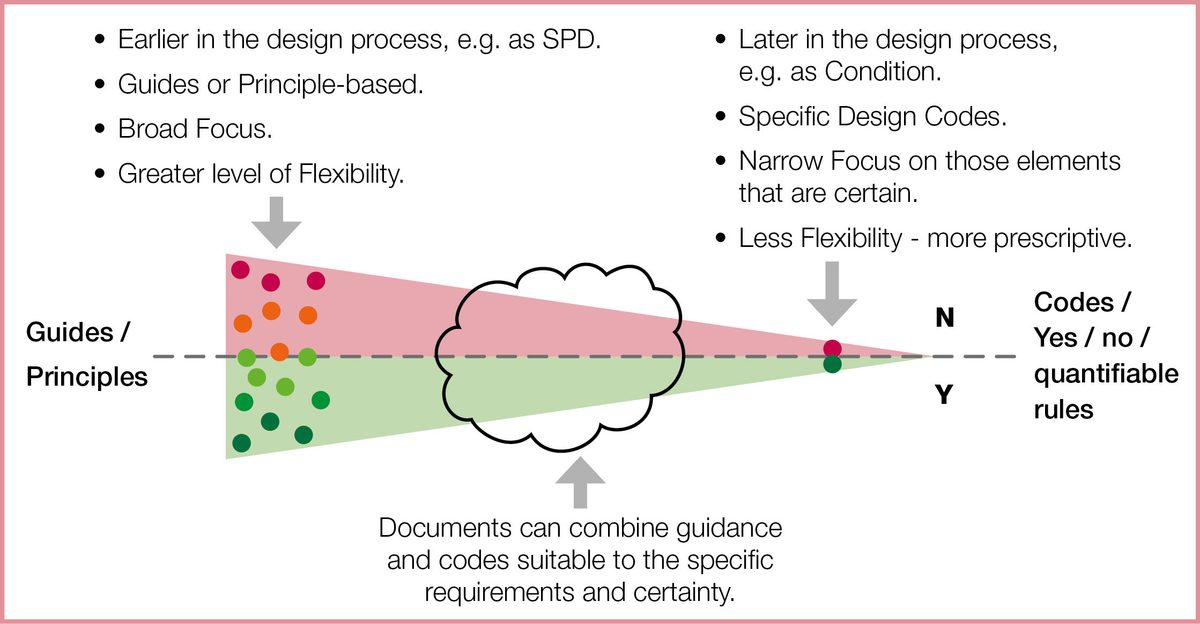
We believe the best outcomes are usually achieved through a combination of codes and guidance. This approach allows us to tailor the specificity of individual requirements to their geographic scope and availability evidence.
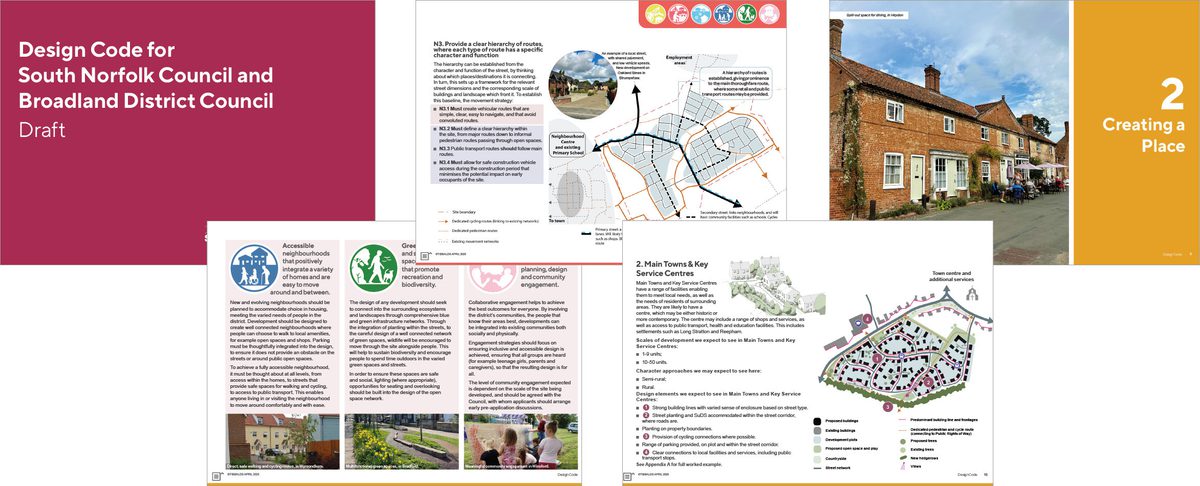
The Design Code for South Norfolk and Broadland covers two rural districts with housing allocations ranging from large city-fringe sites to village infill; to address this variation it provides guidance as well as mandatory codes.
3. Ensure design codes and guides carry weight in planning decisions
Most design codes and guides are produced as part of the planning process, either by the LPA (generally area-based) or by an applicant related to an outline planning approval (generally site-based). Where formally adopted or approved, they become material considerations in future applications, but the weight given to them can vary significantly depending on how robustly they have been prepared. At appeal, planning inspectors have given our Breckland design guide significant weight because of its extensive stakeholder and community engagement.
For a code or guide to hold up under scrutiny, it needs clear development plan policy hooks; consistency with national planning policy and guidance; an understanding of local character and of local conditions for delivery; and local aspirations identified through community engagement.
“The Breckland Design Guide including the Breckland Landscape and Settlement Character Assessment has been very well-received by applicants, agents, residents, members and officers and they were actively involved in its preparation skilfully guided by Tibbalds.”Breckland Council.
4. Identify local aspirations and conditions
The relevance of a local design code or guide depends on it being tailored to the locality. This means identifying local aspirations, issues and concerns through engaging a wide range of stakeholders, including officers, members, local interest groups, and wider communities, reaching out to groups who might not otherwise engage, such as young people, elderly residents or those with access needs.
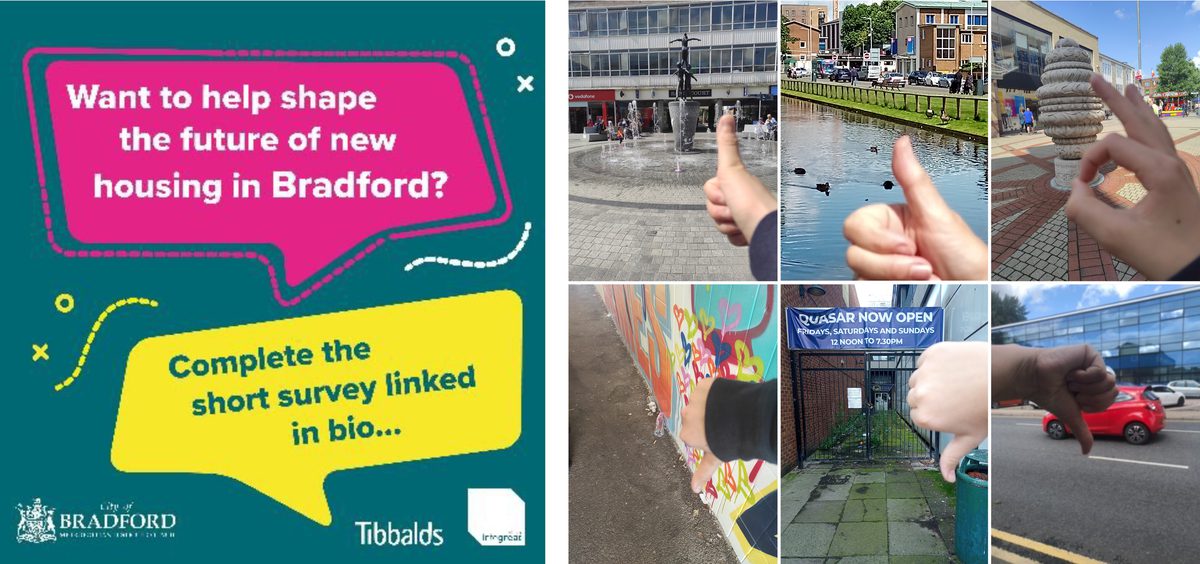
In Bradford, health was a key priority, and engagement for the Homes and Neighbourhoods Design Guide tapped into established networks including the Born in Bradford Forum. Engagement also uncovered local conditions that shaped the guide's priorities: the property forum identified sloping sites as a challenge, which the guide was then able to address directly.
Below: Bradford Design Code online survey and Hemel Hempstead youth engagement.
5. Address local context and character
Identifying what evidence about local character will genuinely support a code or guide is not a box-ticking exercise. It is too easy to fall into ‘analysis paralysis’ rather than taking a strategic view of what is relevant. It requires careful judgement to make sure it helps justify the code or guide requirements and is proportionate. For example, our analysis for the Draft Bradford Design Code concentrated on accessibility measures as the key evidence needed to support a coding plan for medium-density housing.
Local context and character is a key influence upon a design code or guide. At Buckler's Park, the masterplan and design code took numerous design cues from the former TRL site, re-establishing historic links and creating new connections into the protected green space of the SANG to the north. Our site-specific design codes, Northstowe, Bucklers Park and Otterpool Park incorporate colour palettes to inform material choices that were drawn from local town- and landscape character.
Evidence can be sense-checked through engagement, and can also be shaped by it, as local issues and priorities emerge.
Below: Photographs of development at Buckler's Park and Northstowe.


6. Be precise - and say what you mean
The emphasis on illustrations and diagrams is important. A well-chosen image or annotated diagram can communicate a design requirement more efficiently than a written paragraph. But the text matters: after all, it is the text that forms the basis for planning decisions and appeals.
Both codes and guides benefit from being drafted carefully, in the form of an instruction manual. Code requirements use 'must'; guidance uses 'should'. It should be explicitly stated that guidance sets an expectation, not something optional or merely aspirational.
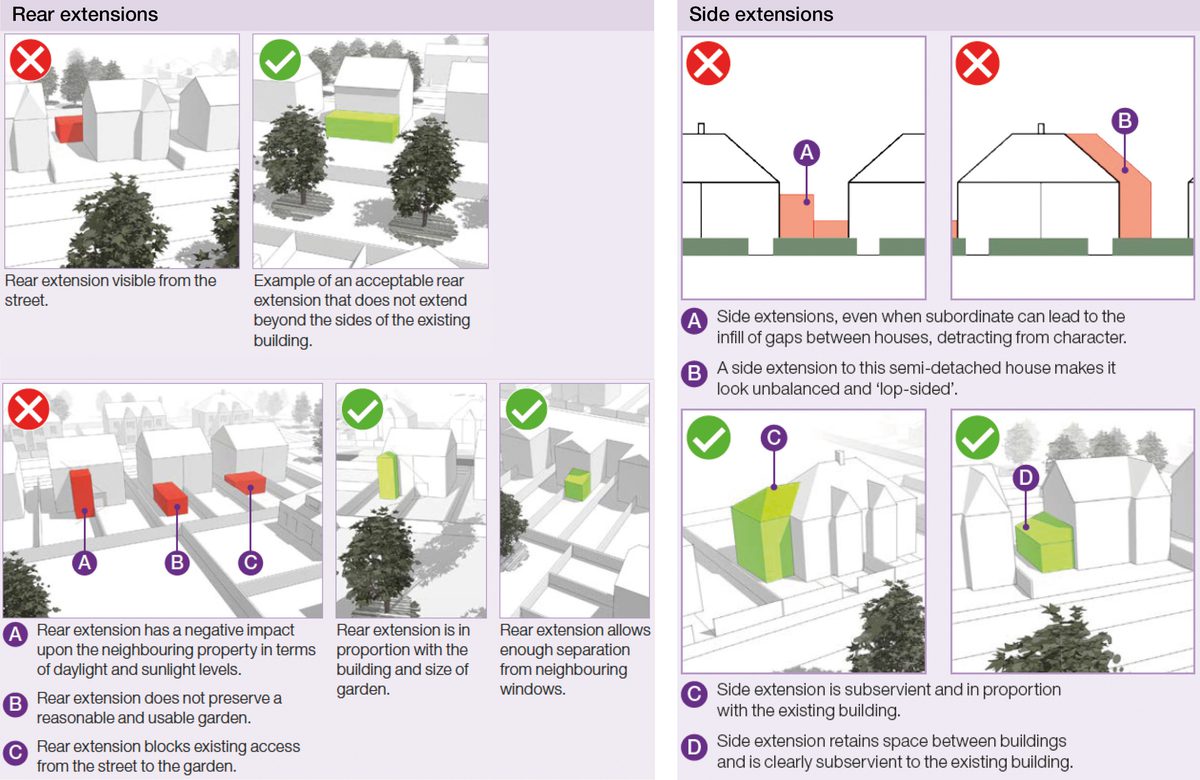
The diagrams and text of the Bracknell Design SPD are kept as simple as possible so that guidance is clear to all officers and applicants, regardless of design training.
Below: Extracts from Bracknell Design SPD.
Testing drafts with real users is the most reliable way to find out whether a document says what was intended. Without that testing, ambiguity can go undetected until it emerges through planning applications in the resulting built developments, potentially with significant consequences. South Norfolk and Broadland officers trialled the draft design code as part of their day-to-day work to check usability before it entered the formal approvals process.
7. Engage widely to embed it in daily use
A well-prepared code or guide is only as effective as its uptake. To drive real change, it needs to become a go-to reference — used consistently by development management and policy officers, members, applicants and their design teams, and by parish councils, amenity societies and local business groups. In Birmingham, officers’ consistent use of the BUDS design guidance successfully led to the city centre and the local culture of the development industry being successfully transformed over time.
“Perhaps the biggest lesson from Birmingham is that ‘it can be done’. It is possible to develop a strong understanding of urban design principles that can be shared with senior politicians and with developer partners, and subsequently it is possible to develop these principles in design strategies that influence real outcomes.”Birmingham City Council.
Engaging widely with stakeholders during preparation serves a dual purpose: it makes the document genuinely usable, and it builds the understanding and acceptance that makes consistent application possible. Working closely with parish councillors in Woldingham meant we could address their concerns about new development, and also that they understood and accepted the resulting design guidance, when it was adopted by Tandridge Council.
Below: Extract from Woldingham Design Guidance (SPD).
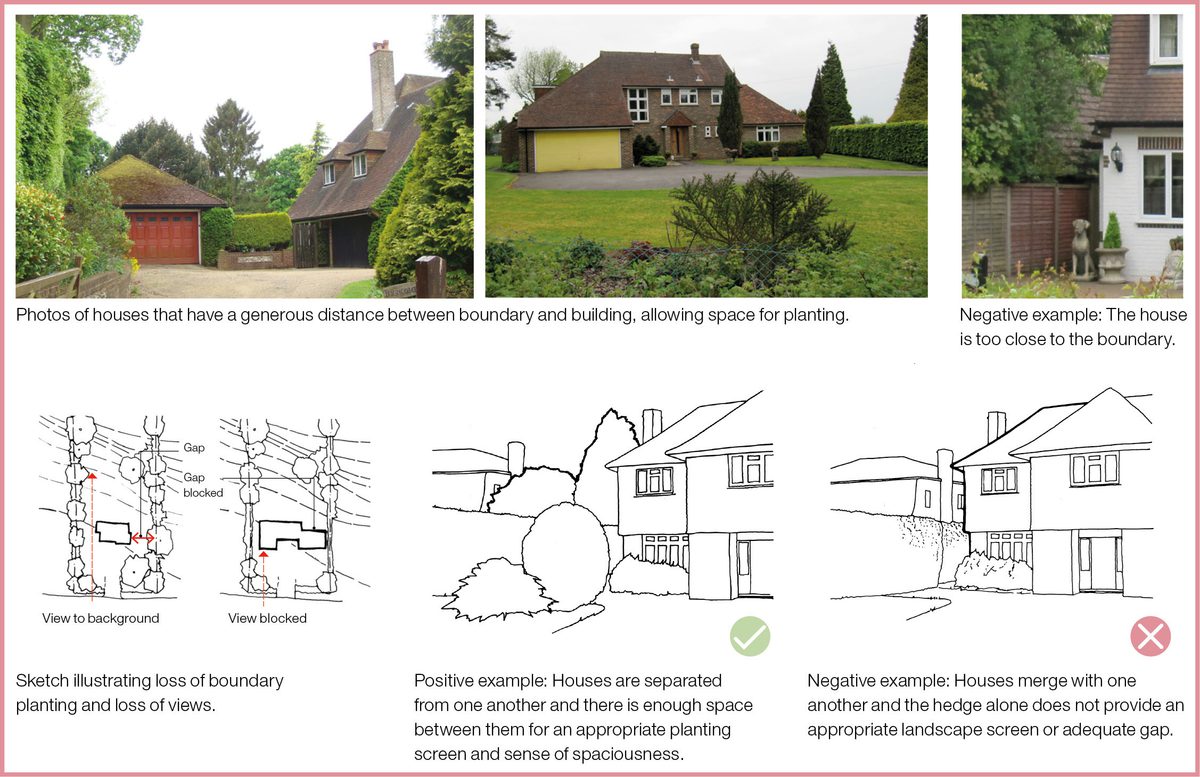
In the short term, embedding a new code or guide requires political will and determination. It may mean refusing more applications and defending those decisions at appeal. That can feel challenging, but is often necessary if new quality benchmarks are to become established as expected standards.
What good design codes and guides can do
At their simplest, design codes and guides regulate planning permissions and improve the design of what gets built. But at their best, they can shift expectations and build shared understanding between communities, planners, developers and designers. They can add value in places once resistant to change and in places that had lost confidence in their ability to shape it, securing the future quality of places that range from cities and market towns to rural districts, and from large new neighbourhoods and complex urban regeneration to infill.
But it requires purpose, the right tool, genuine rigour in preparation, and a commitment to making these documents work in practice. At its best, it is not only a technical exercise, it is a process of building shared ambition for placemaking.
“Many thanks for your patience and attention to detail, as well as skill and flair in producing a well-organised and eye-catching document.”South Norfolk and Broadland Councils.
“Thanks for all your help in getting the SPD to this stage. We’re impressed with how the guidance looks and it reads well.”Eastleigh Borough Council.
Related Updates

Tibbalds joins Festival of the Future 2026 at the RCA
Tibbalds

Go ahead for major Crystal Palace National Sports Centre plans
Tibbalds

Tibbalds appointed for latest phase of Hatfield regeneration
Tibbalds
Stay In Touch
Sign up to our Newsletter
Subscribe to our newsletter to receive updates about making people friendly places.